
6 min read
Physical activity is often discussed in the context of fitness trends, athletic performance, or aesthetic goals. But at a global policy level, it is framed much more simply: as a baseline requirement for long-term health.
The 150 minute physical activity guideline recommended by the World Health Organization (WHO) suggests that adults engage in at least 150 minutes of moderate-intensity physical activity per week. This benchmark is not designed for athletes. It represents the minimum threshold associated with meaningful health benefits, including improved cardiovascular function, reduced risk of chronic disease, and enhanced metabolic stability.
Yet public health data suggests that a significant proportion of women in India do not consistently meet this benchmark.
Understanding this gap is the first step toward any responsible conversation about women’s physical vitality in India.
The 150 minute physical activity guideline forms the foundation of broader discussions around women’s physical activity patterns in India.
The broader implications of women’s activity levels also extend to economic participation and long-term productivity.
Women’s Physical Activity and Economic Growth
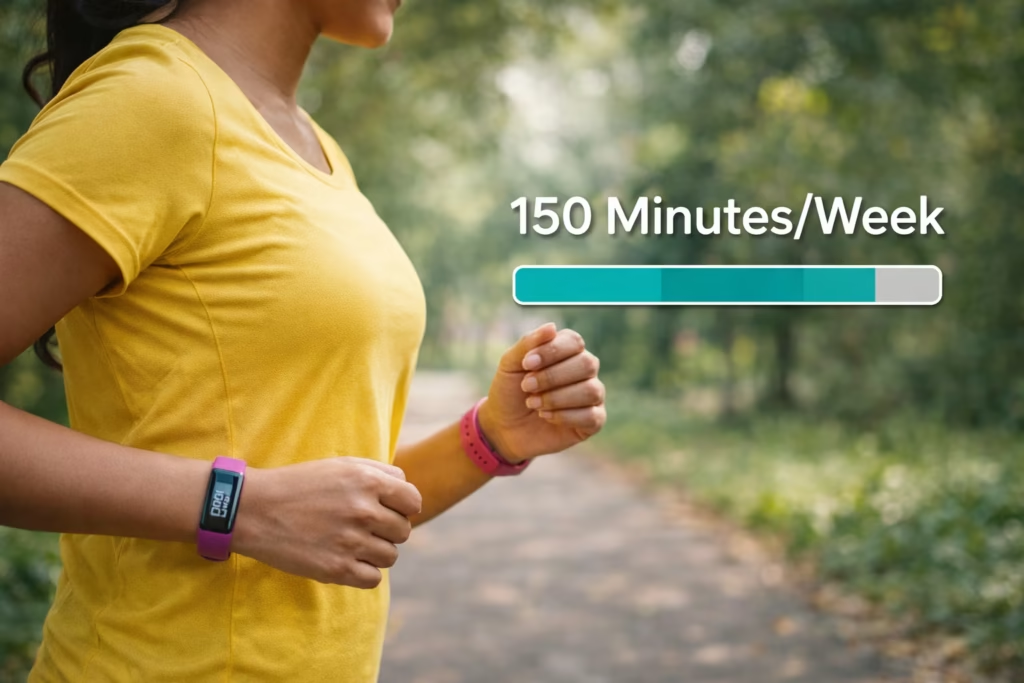
According to the World Health Organization, adults aged 18–64 should accumulate at least 150 minutes of moderate-intensity aerobic physical activity per week, or 75 minutes of vigorous-intensity activity, or an equivalent combination.
Moderate-intensity activity refers to movement that raises the heart rate and breathing while still allowing conversation. Examples include brisk walking, steady cycling, swimming at a moderate pace, or structured aerobic routines.
The distinction between moderate and vigorous activity, and how to calculate these minutes accurately, is often misunderstood.
This 150-minute threshold can be distributed across the week. For example:
The guideline does not require gym membership or advanced training. It represents a baseline level of consistent movement associated with long-term health outcomes.
Global research on physical inactivity has consistently identified inactivity as a significant public health concern. WHO reports indicate that insufficient women physical activity in India is one of the leading risk factors for non-communicable diseases worldwide.
When examining gender differences, global studies have often found that women are less likely than men to meet recommended activity levels.
In India, national and international studies suggest that a substantial proportion of adults fall below recommended physical activity thresholds. Within that population, women frequently demonstrate lower participation in structured exercise or leisure-time physical activity compared to men.
Understanding the structural reasons behind this pattern requires deeper examination beyond statistics alone.
Why Many Women Struggle to Meet Physical Activity Guidelines
One area that often creates confusion is the distinction between incidental movement and structured physical activity.
Many women in India maintain physically demanding daily schedules. Household responsibilities, commuting, caregiving, and occupational tasks require significant energy expenditure. However, not all physical effort translates into cardiovascular conditioning or long-term strength development.
Structured moderate-intensity activity typically involves:
Incidental movement, while valuable, may not consistently reach the intensity or duration required to generate long-term cardiovascular and metabolic benefits.
Clarifying this distinction helps interpret activity data more accurately.
Understanding Moderate Physical Activity
The WHO 150 minute recommendation is not arbitrary. It is derived from extensive global research linking consistent moderate activity to measurable reductions in risk for:
Regular physical activity has also been associated with improved cognitive performance, mood stability, and long-term functional independence.
At scale, insufficient physical activity increases healthcare burden and contributes to rising rates of non-communicable diseases. For a developing economy with a large and growing workforce, preventive health becomes economically significant.
Women represent a substantial portion of India’s workforce and simultaneously carry critical roles within families and communities. Sustained physical vitality influences productivity, caregiving capacity, and long-term well-being.
Public statistics quantify frequency. They measure duration. They indicate trends.
What they do not capture are lived realities.
Data cannot fully explain:
Numbers reveal the scale of the gap. They do not fully explain its depth.
Before attempting to address this gap, listening becomes essential.
Moderate-intensity activity raises the heart rate and breathing while still allowing conversation. Examples include brisk walking, cycling at a steady pace, or swimming at moderate intensity.
Some forms of domestic activity may contribute to overall energy expenditure. However, structured moderate-intensity activity is typically more consistent in achieving cardiovascular benefits.
Insufficient physical activity is associated with increased risk of non-communicable diseases such as heart disease, diabetes, and certain cancers.
Health experts often recommend at least 150 minutes of moderate physical activity per week for people with prediabetes. Regular activity such as brisk walking or cycling can help improve insulin sensitivity and reduce the risk of developing type 2 diabetes.
No. The World Health Organization recommends 150 minutes of moderate-intensity physical activity per week, not per day. This usually means about 30 minutes of activity on five days a week, which is sufficient to support cardiovascular health and reduce the risk of chronic diseases.
Completing 150 minutes exercise per week improves cardiovascular health, helps regulate blood sugar, strengthens muscles, and reduces the risk of conditions such as heart disease, diabetes, and obesity. It also contributes to better mental health and overall energy levels.
This series marks the beginning of our effort to understand women’s physical activity patterns more deeply.
Public data reveals measurable gaps. What it does not reveal are lived experiences – the practical, social, and personal realities behind those numbers.
If you would like to participate in structured discussions or small, city-based listening circles focused on consistent movement, you may indicate your interest below.
We will reach out selectively as pilot initiatives begin.
At this stage, the goal is not to prescribe solutions.
It is to understand the baseline.
Public data suggests that a meaningful gap exists between recommended activity levels and actual movement patterns among many women in India. The reasons are likely layered and complex.
Any responsible effort to address this gap must begin with careful observation, grounded research, and direct engagement with lived experiences.
Understanding the 150 minute physical activity guideline is the first step toward evaluating women’s fitness patterns in India.

