
6 min read
In the previous discussion on the 150-minute weekly physical activity benchmark, we examined what global health authorities recommend and what public data suggests about activity levels among women in India.
150 Minute Physical Activity Guideline
However, understanding physical activity barriers for women in India requires looking beyond statistics. If the benchmark is clear and the health benefits are well established, why do many women still fall short of recommended levels?
Public health data identifies the gap. Understanding its context requires examining structural, social, and practical realities.
This exploration is not about assigning blame. It is about identifying patterns that shape everyday decisions around movement and why women struggle to exercise consistently in many contexts.
The World Health Organization recommends that adults engage in at least 150 minutes of moderate-intensity physical activity per week.
Moderate-intensity activity includes sustained movement that raises heart rate and breathing, such as brisk walking, cycling, or structured aerobic routines.
In theory, the recommendation appears straightforward.
In practice, meeting this benchmark often requires several enabling conditions:
While the guideline itself is simple, the conditions required to fulfill it are not evenly distributed.
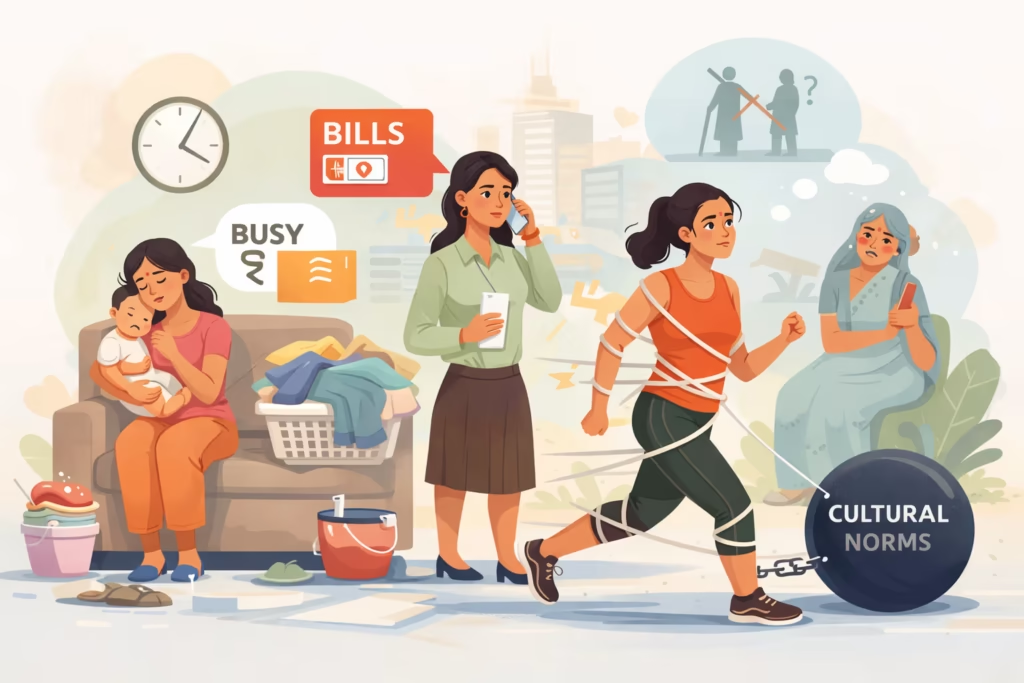
Time-use studies in India have consistently shown that women spend significantly more hours on unpaid domestic and caregiving work compared to men.
This imbalance influences daily scheduling flexibility.
Even among working professionals, women often carry dual responsibilities — employment alongside household management. Structured exercise, particularly when it requires travel to facilities or uninterrupted time blocks, may be deprioritized.
It is important to distinguish between being physically busy and engaging in sustained moderate-intensity activity.
Structured Exercise vs Incidental Movement
For many women, physical inactivity is not simply a matter of motivation. It is often a reflection of structural time compression.
Urban design, infrastructure, and safety perceptions also influence women physical activity in India.
Access to the following varies widely across cities and towns:
Research globally shows that safe, accessible spaces strongly influence physical activity participation rates. Where such environments are limited or perceived as unsafe, participation tends to decline.
Limited access to safe environments therefore becomes one of the most persistent women exercise barriers across different regions.
These factors do not appear in raw inactivity statistics, but they play an important role in shaping behavior.
Physical activity is sometimes associated primarily with:
When movement is framed narrowly, those who do not identify with these goals may disengage.
If structured exercise is perceived as optional or secondary to family responsibilities, it becomes easier to postpone.
Reframing movement as a basic element of health — rather than a specialized activity — may be necessary for long-term improvement.
This is not a cultural critique. It is simply a reflection on how priorities evolve within social systems.
Chronic fatigue, irregular sleep patterns, nutritional gaps, and high cognitive load can also influence physical activity participation.
Public health discussions often focus on time and access. However, energy availability is equally relevant.
Regular exercise requires not only minutes in a schedule, but physical and psychological bandwidth.
When daily life already demands significant effort, adding structured movement may feel burdensome rather than restorative.
Public statistics quantify participation levels, but they cannot fully explain lived experience.
They cannot easily capture:
Numbers reveal trends. They do not reveal texture.
Understanding these lived dimensions requires direct engagement and conversation.
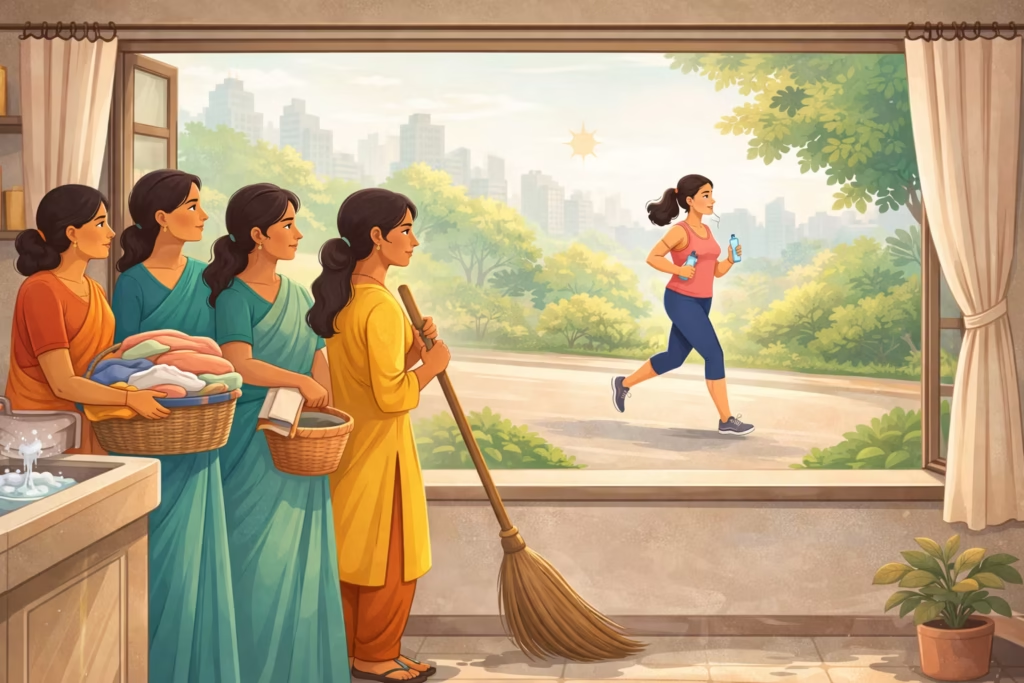
Before proposing interventions or claiming solutions, these experiences deserve careful attention.
It is tempting to interpret physical inactivity among women as a personal shortcoming.
However, when patterns appear consistently across regions and demographics, they usually point to structural influences.
Public health challenges are rarely solved through individual motivation alone. They require supportive environments, policy awareness, and gradual cultural shifts.
The gap between recommended activity levels and actual participation is therefore better understood as a systems challenge, rather than an individual one.
Recognizing this distinction changes how meaningful progress can be approached.
Common barriers include time constraints, caregiving responsibilities, lack of safe public spaces, and cultural perceptions that deprioritize structured exercise.
Women often face overlapping responsibilities related to work, family, and domestic duties, which reduce the time and energy available for regular exercise.
Some domestic tasks involve physical exertion. However, structured moderate-intensity activity more consistently improves cardiovascular fitness.
Long-term improvements typically involve supportive environments, accessible spaces, social reinforcement, and gradual habit formation.
This series marks the beginning of our effort to understand women’s physical activity patterns more deeply.
Public data reveals measurable gaps. What it does not reveal are lived experiences — the practical, social, and personal realities behind those numbers.
If you would like to participate in structured discussions or small city-based listening circles focused on consistent movement, you may indicate your interest below.
We will reach out selectively as pilot initiatives begin.
The gap between recommended activity levels and actual participation among many women in India is not trivial.
It intersects with time structures, environments, social norms, and energy cycles.
Before designing solutions or making promises, it is important to deepen understanding of these layers.
Public data shows the pattern.
The next step is listening to the lived realities behind it.

